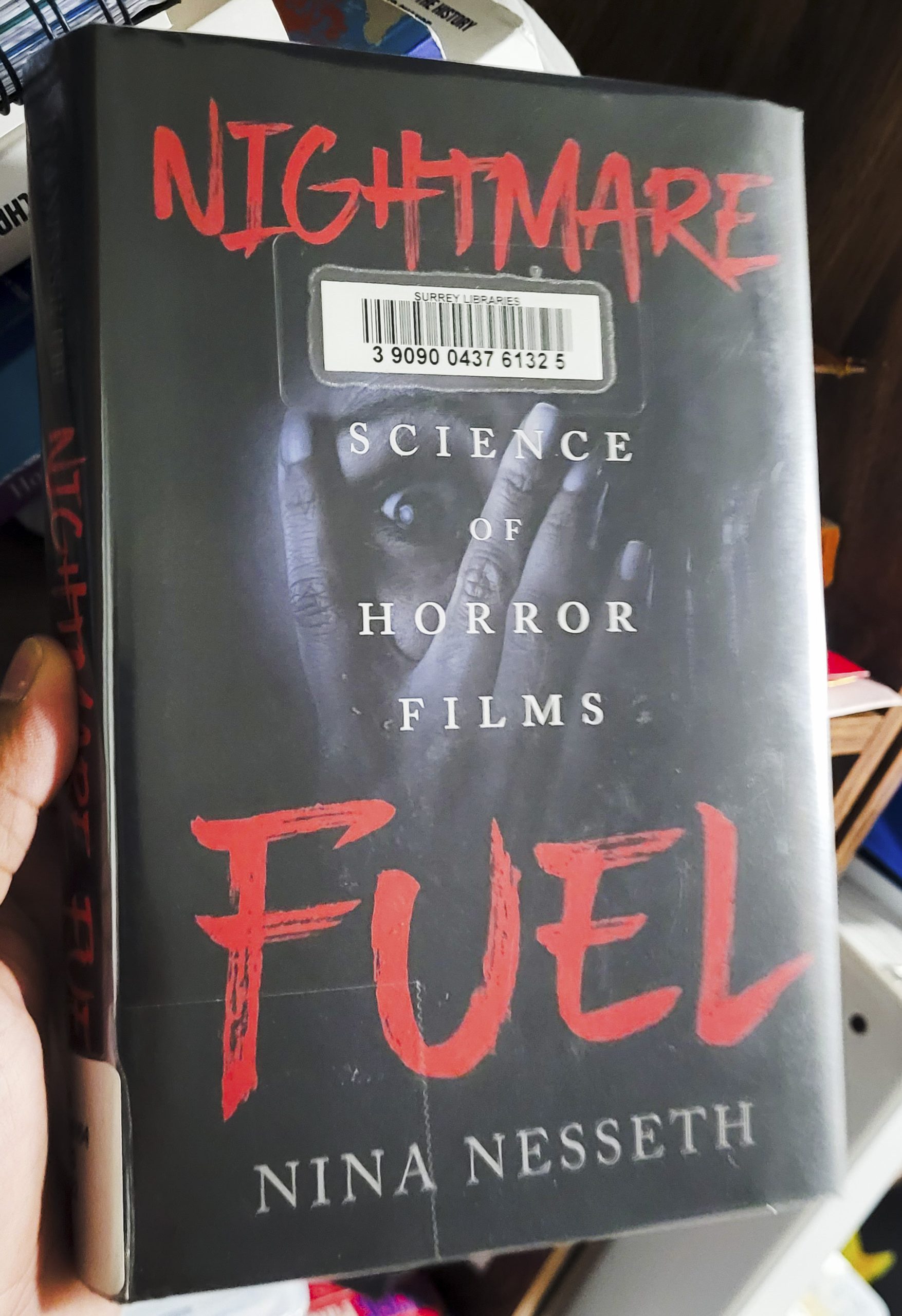

1. Name: Nightmare Fuel : Science of Horror Films
2. Author: Nina Nesseth
3. Genre: Non Fiction/Horror Films
4. Book Post No.: 80
Horror movies are designed to scare you. And people watch them intentionally to get scared. What is this allure of horror that makes people watch them even though they get frightened? How do horror movies work with visuals, sounds, costumes and other elements to create this effect? These and more are the topics Nina Nesseth explores in this book using psychology and neuroscience.
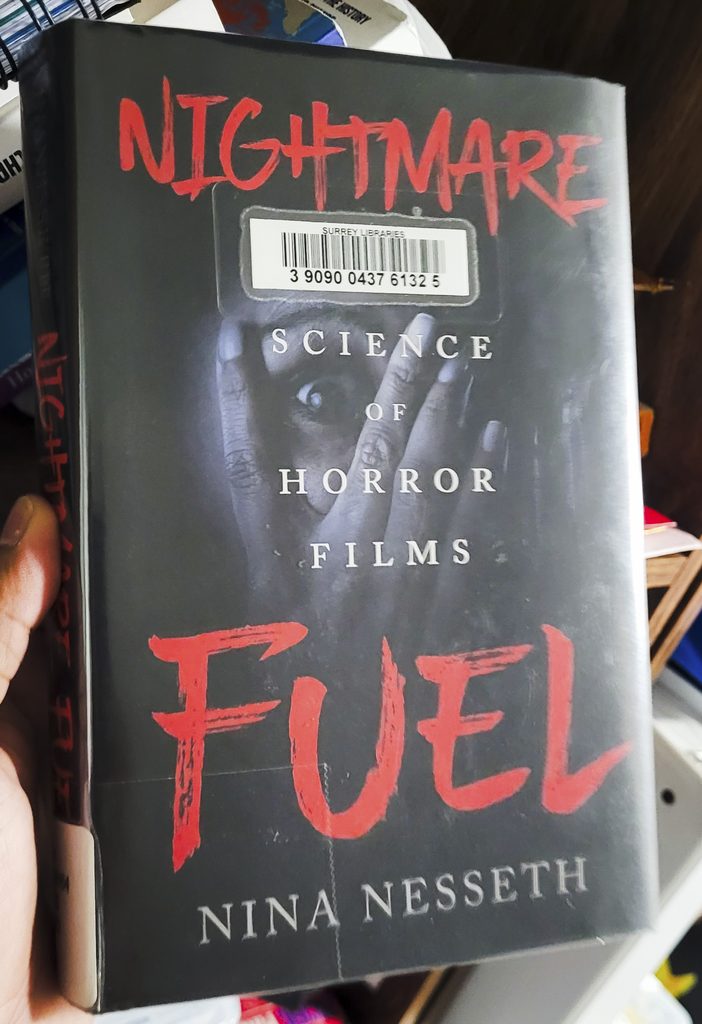
Being a horror fan myself, when I saw this book in my local branch of Surrey Libraries I immediately picked it up. I was curious about what it would say about horror movies and how they are made. One thing I always mention whenever conversations about horror come up is that I am a fan of a very specific sub genre, gothic horror and also like some other types like psychological horror, folk horror, sci fi horror and Lovecraftian horror. I don’t like slasher (ex Friday the 13th), body horror (like David Cronenberg movies), torture horror (Hostel, Saw) and anything which involves too much violence and gore. In the Introduction chapter, Nina says the below, which made me smile. It is so true.
Horror is a genre as broad as the range of human fears, and it takes as many shapes. In the same way, horror fans come in many forms, from all-around aficionados to adoring fans of a single scary flavor. What binds us all is our love for the scare.
In the first chapter, Nina explores what fear is and what happens in our brain when we see a jump scare. She then covers the history of the genre and then moves onto talking about how horror movies employ different types of visual and cues including monsters, sounds and shock factors. She also talks about violence in horror movies and body horror. She wraps up by talking about the appeal of horror movies through the years.
One section I loved was where she talks about how horror movies mostly reflect the fears of that particular era. And yes the book mostly looks at western perspectives and there are just a few other film industries mentioned like the Japanese and Italian. The book focuses heavily on the science part of our bodies’ reactions and doesn’t talk much about the movies themselves. I picked up the book expecting more about moviemaking and maybe lots of information or breakdowns of iconic movies but there’s not much there. There were sections I had to push myself to just run through so that I could finish the book. Overall a decent book but readers who want film breakdowns may be disappointed, but those curious about the psychology might enjoy it. I feel horror fans are usually more interested in the horror itself than the science of how our bodies react.
I loved the last paragraph of the penultimate chapter which I have quoted below:
“In my time spent as a horror writer and in my time spent researching this book, I’ve met horror fans whose love for horror takes on countless shapes and spans horror’s myriad subgenres to various degrees. Some horror fans will unabashedly consume any form of horror, from low-budget schlock to big studio oeuvres, with equal relish. Others will hyperfocus on their favorite skinny pie slices of the genre, reserving their energy exclusively for found footage or giallo. Some are casually obsessed fans who love horror in a way that consistently gets their butts into a cinema seat for every new horror release but doesn’t demand engagement outside of the movie theatre; others are encyclopedic in their passion, able to draw from startlingly deep wells of horror trivia. While it appears that there might be some personality traits that might make some of us more likely to find horror sooner, it strikes me that our reasons and motivations for consuming horror are as nuanced and varied as the ways in which we love it. Whatever the shape of your love for horror, as long as it is in good faith toward other horror fans, it’s a valid love for horror.”