
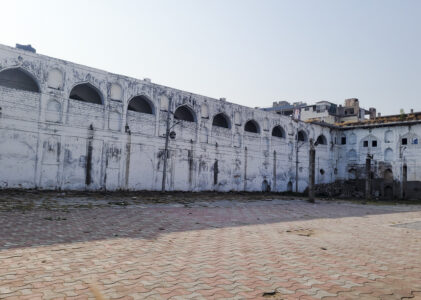
What do Ottoman Cairo, Istanbul, Edirne, Mughal Delhi and Qutub Shahi Hyderabad have in common? In the 1600s, they were all home to some of the best hospitals in the world. Remarkably, Hyderabad’s Dar-ul-Shifa still stands today, though in a fairly neglected state. On a bright Sunday morning earlier this year, I joined a heritage walk through the Dar-ul-Shifa locality, the area which takes its name from this very building.

As the auto made its way through the still empty streets of a Sunday morning, the cool early morning breeze blew across my face taking me back to the countless Sunday morning trips that I used to do back when I lived in Hyderabad as well as on my later trips to the city. I couldn’t help but fall into that melancholic trance which is part nostalgia, part longing for this beautiful city. On top of that, the circumstances of this particular trip to India weren’t great, but that’s a story for another time. This walk was a way for me to go back to my love of heritage buildings. Back in my undergrad days in Hyderabad, visiting old buildings used to be one of my favorite pastimes.

With these thoughts swirling in my mind, the auto dropped me off in front of a building called the Aza Khana-e-Zehra in the old city at around 7 am. I spotted two other people there who were also waiting for the walk. We started chatting before we were joined by others including Harimohan, who I later found out is a writer. He also has a blog, much like me, which delighted me. Soon Tanya, the host of the walk, arrived and we made some introductions. Tanya is an architect by profession and has a keen interest in heritage and conservation. She organizes these walks as a passion project. My dad, who attends these walks regularly, was feeling a bit under the weather that day so he couldn’t join.
I wasn’t new to these kinds of heritage walks, having attended some of the first ones organized by Telangana Tourism and hosted by Madhu Votterey and Qayyum. I attended two of them at that time, about which I wrote here: Walk 2 in 2010 and Walk 3 in 2012.
We were all gathered near Aza Khana-e-Zehra which is an Ashurkhana that was built by the last Nizam of Hyderabad, Mir Osman Ali Khan, in memory of his mother, Zehra Begum. Even though Osman Ali Khan was himself Sunni, his mother was Shia and he built this hall in her honor despite that difference. Built in the 1930s, it lies on the banks of the Musi river and is built in the Osmanian Architectural style. It’s a large white building with lots of small green domes and is one of the largest Ashurkhanas in India. As it was closed, we couldn’t go inside but I heard from some of the others that it’s beautiful. Ashurkhanas are gathering spaces of Shia Muslims and since the Qutubshahis were Shia, Hyderabad is dotted with Ashurkhanas, some of which are many hundreds of years old.
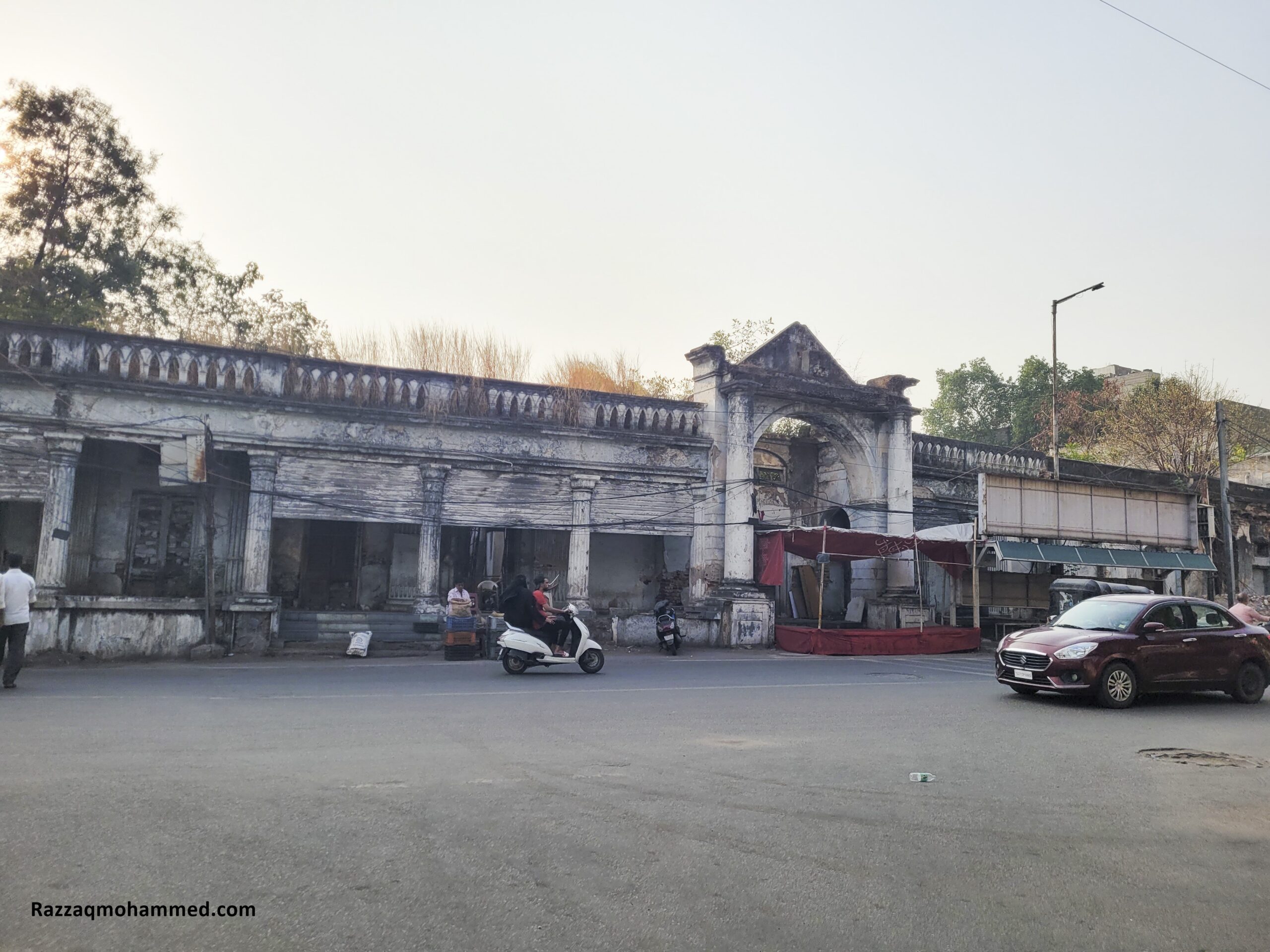
From here, we started walking south, on the Darul Shifa road, which was getting busier now. A little bit ahead, we made a quick stop opposite a crumbling building which clearly had European elements in its architecture. Tanya told us this was the old Municipal Corporation Office. Built during the time of the last Nizam, Osman Ali Khan, it previously housed a railway ticket reservation counter and the municipal office. The facade is marked by a semi-circular European arched doorway leading to the complex inside. I would have loved to go inside, but it was off limits. Tanya told us it was set to be demolished to make way for the new Metro line.
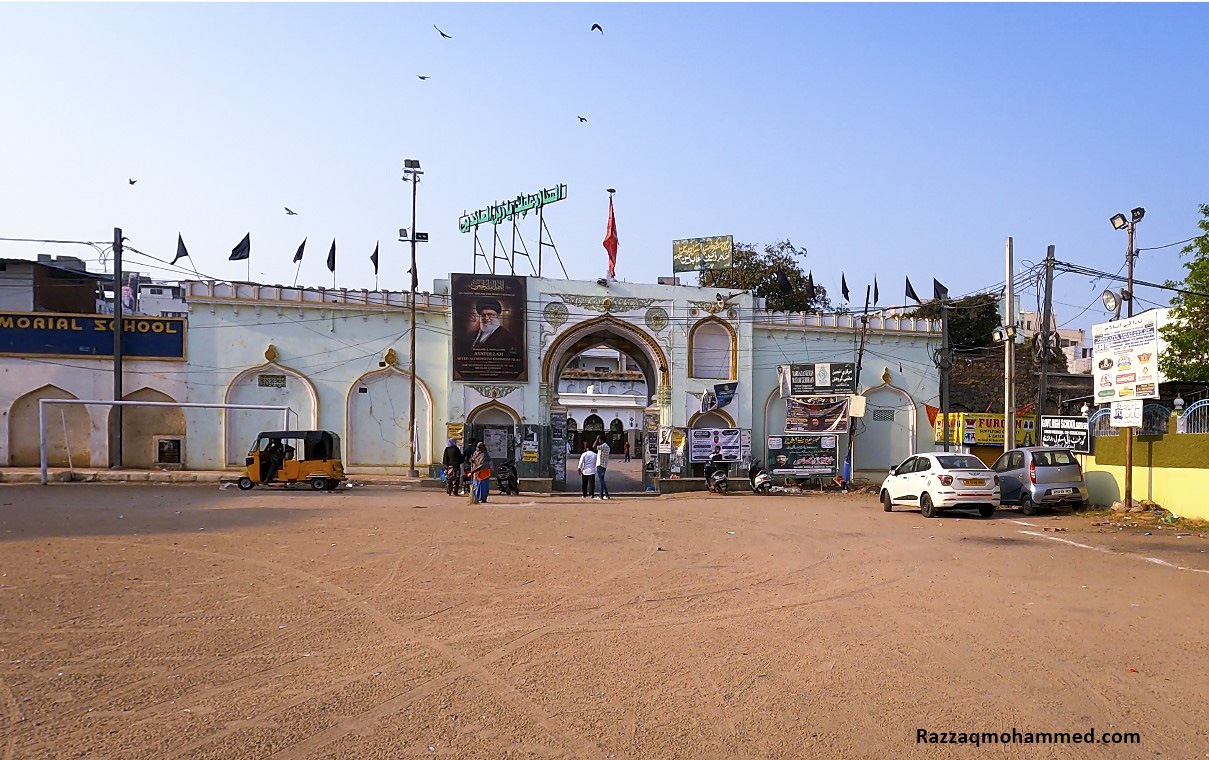
We resumed walking south till we reached the main attraction of the day, which was the Dar-ul-Shifa complex. From the outside, the area looks pretty nondescript belying its 400-year-old rich history. Dar-ul-Shifa means House of Health. The hospital, which is not functioning anymore, was built by Mohammed Quli Qutb Shah (the same Sultan who built the Charminar) in 1595. According to a 2017 Times of India article by Syed Akbar, Dar-ul-Shifa had inpatient and outpatient wings, a residential medical college which conducted research on treatment of diseases through dietary regulation, a place to stay for attendants of patients and even a quarantine setup to prevent the spread of infectious diseases like plague. It had around 300 beds, practiced Unani and later Ayurveda and was one of the first two-storied hospitals ever constructed in the medieval world. The article also notes that Qutub Shahi Hyderabad produced medical research in this period.
Notable physicians of the era authored texts like Ikhtiyarat-e-Qutub Shah and Rasala-e-Miqdariya, both by Hakim Mir Mohammed Momin Astarabadi. Another famous Hakim (which loosely translates to Physician in Arabic) was Hakim Nizamuddin Ahmad Gilani, who wrote Majmua-e-Hakim-ul-Mulk which was a compendium of medical and non-medical articles, letters, and poetic works, and Shajra-i-Danish, which was a collection of journals and essays mostly on medicine but also touching on intellectual and philosophical reasoning. Hakim Nizamuddin served as the head of Dar-ul-Shifa at one point and the Hakimpet locality in Tolichowki is even named after him. The Qutb Shahi Tombs complex houses his tomb, one of the few tombs in that complex which are not of royalty.
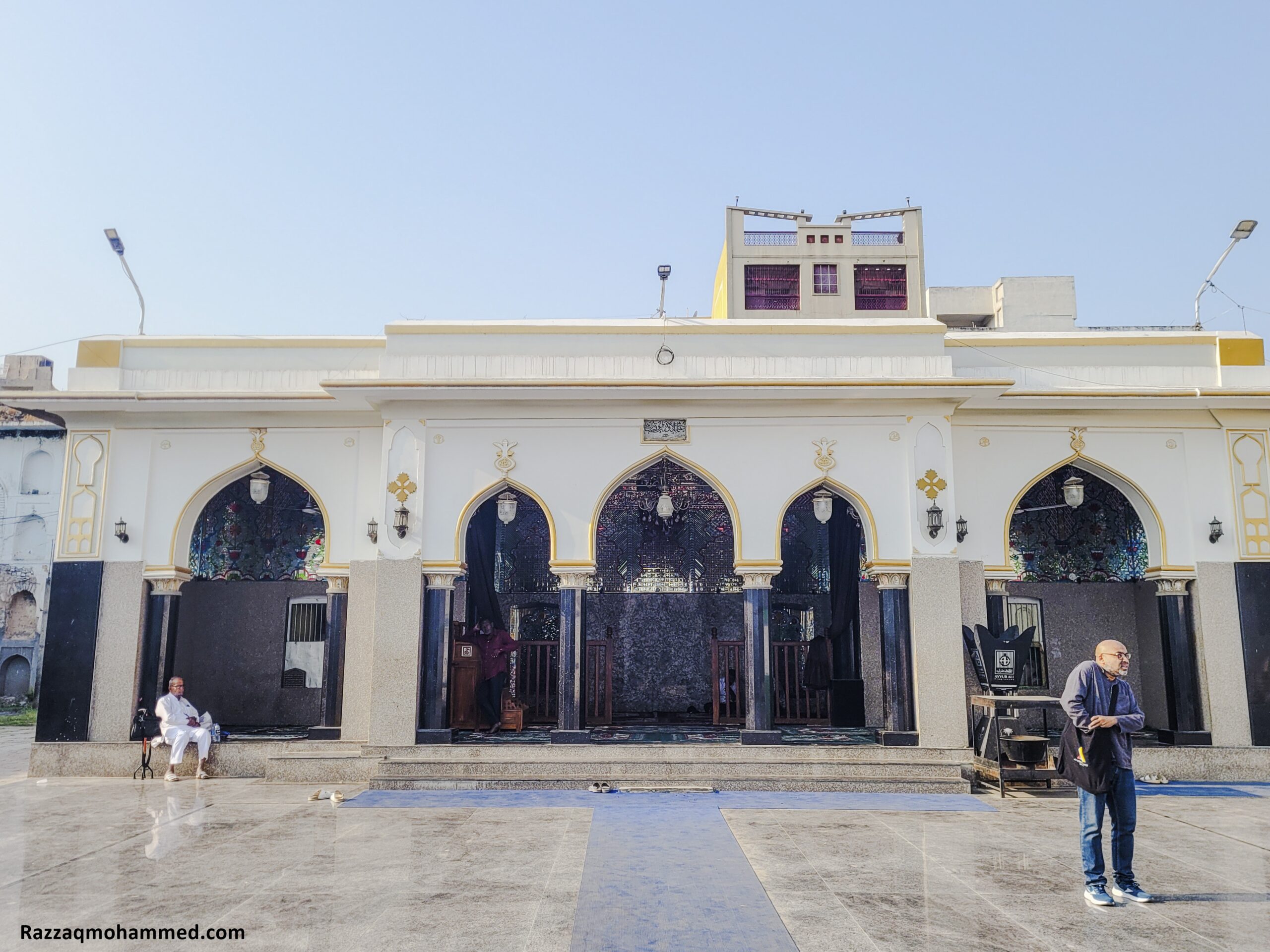
We walked towards the main entrance, which was adorned with a huge poster mourning Ayatollah Khamenei, who had recently been killed. This isn’t surprising, given that the old city area has a significant Shia population. Ayatollah is a title given to high-ranking Shia clerics, and Khamenei, as Iran’s Supreme Leader, was one of the most prominent ones. Inside the complex, to our front was an Ashurkhana which houses the Alawa-e-Sartouq, a relic related to the fourth imam of the Shia Muslims, Hazrat Zain ul Abideen. There were a few people inside who welcomed us to look around inside the structure. All of us, being very respectful of the prayers of the men inside, quickly looked around and walked outside.
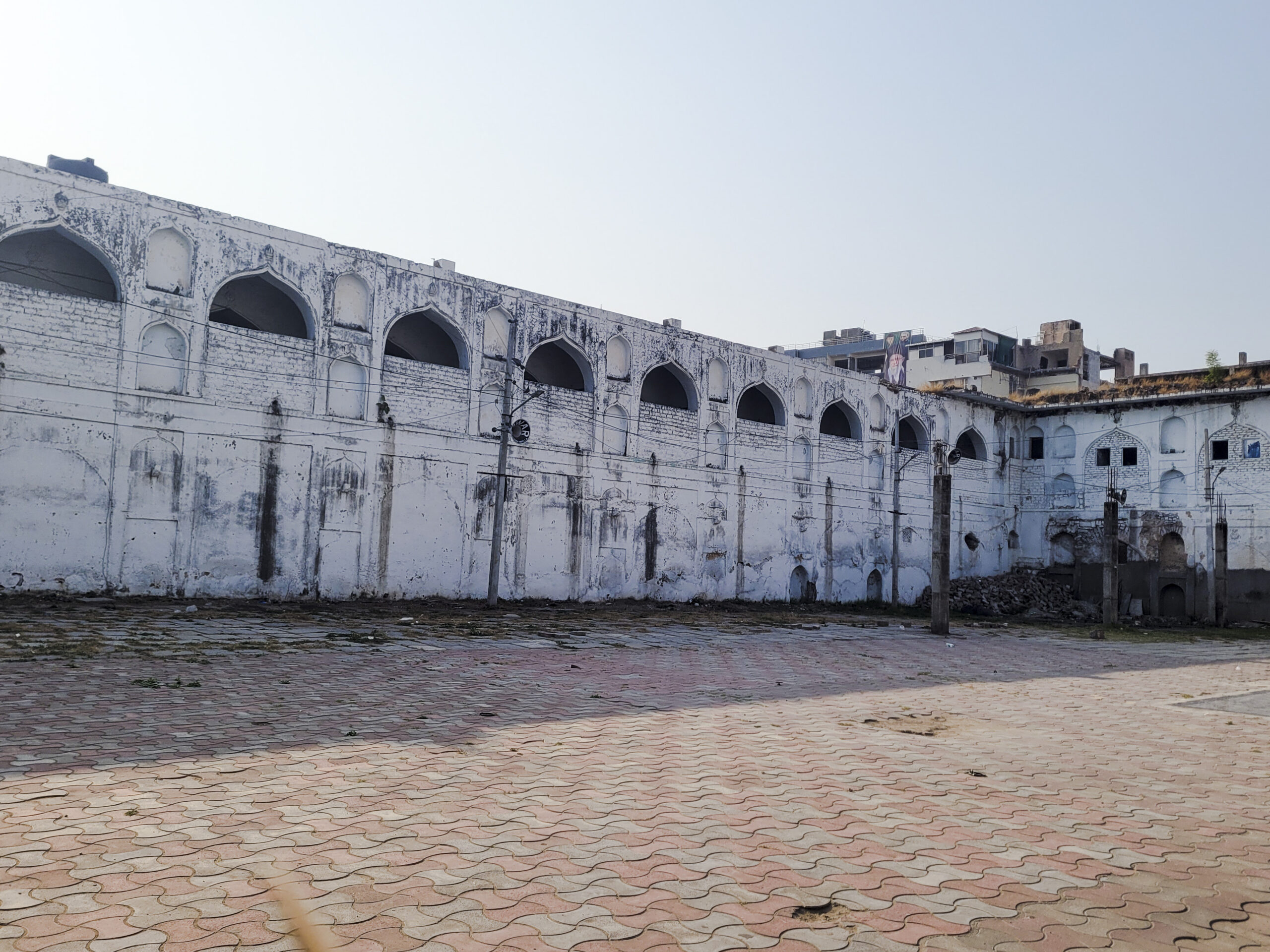
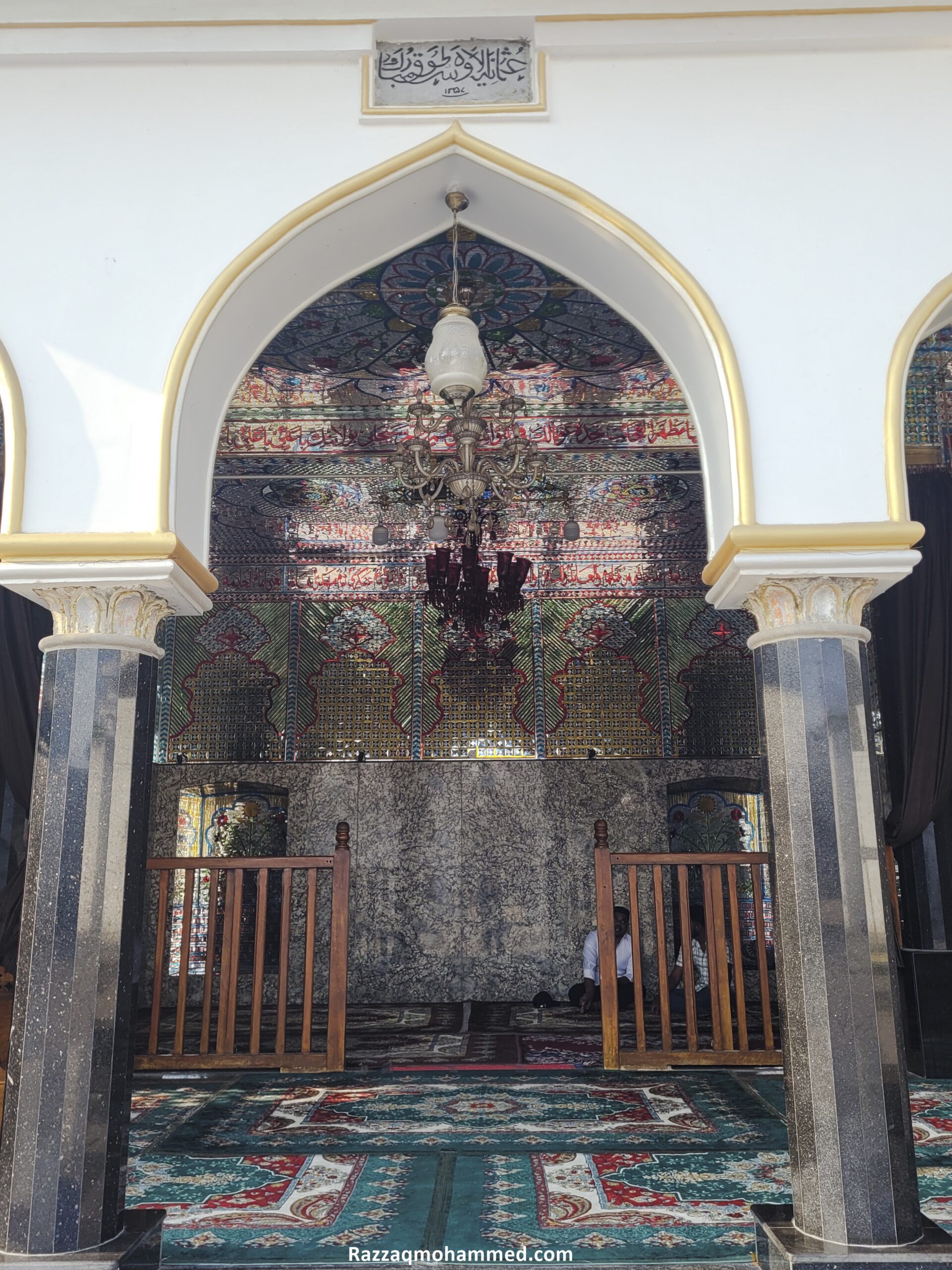
To the left were the remnants of the Dar-ul-Shifa Hospital. The building now houses a school, and all we could see from inside were several arches which were partially bricked up. It was disheartening to see this glorious and proud piece of history reduced to this. Tanya gave us a background of the place. As we were leaving, some people started chatting with the group, with Tanya asking them some questions which they answered with interest. There wasn’t much to see in the complex, but knowing what once stood there was the point of that stop.
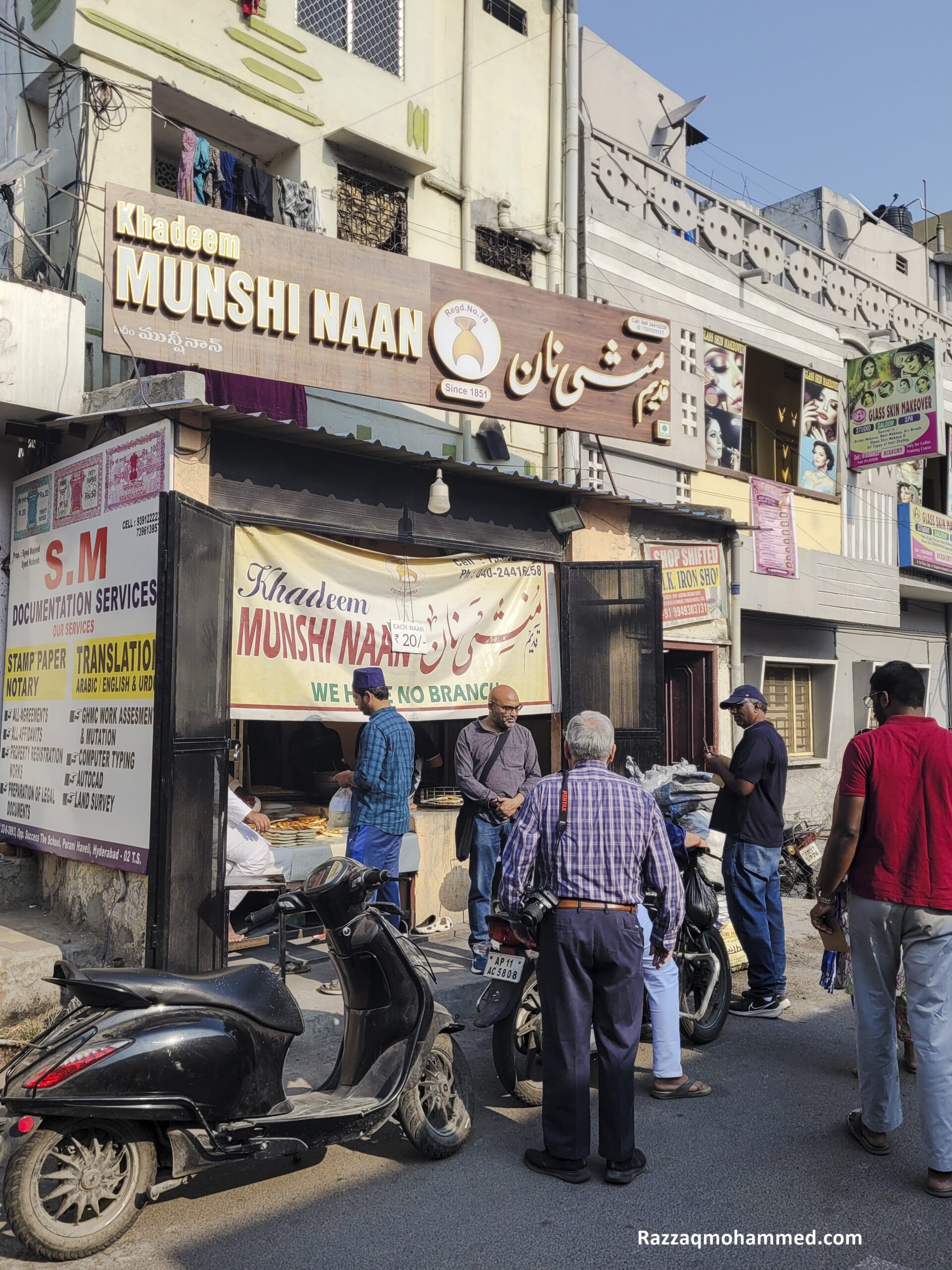
Our next stop was Khadeem Munshi Naan. The original location on the main road was on the proposed metro line plan, so it was relocated onto a side road. We walked over to this new location and bought some nice hot naans. Khadeem Munshi Naan, which is almost 175 years old now, was set up in 1851 by Mohammed Hussain Saheb, who was an accountant clerk during the time of the fourth Nizam of Hyderabad. These square-shaped naans are extremely popular in Hyderabad, and Munshi Naan is still one of the oldest to make them. Having naans with Mutton Marag is one of my favorite items from a Hyderabadi wedding function. By this time, I had struck up some nice conversations with others in the group and we all shared the naans, since some of us found them too big to finish alone.
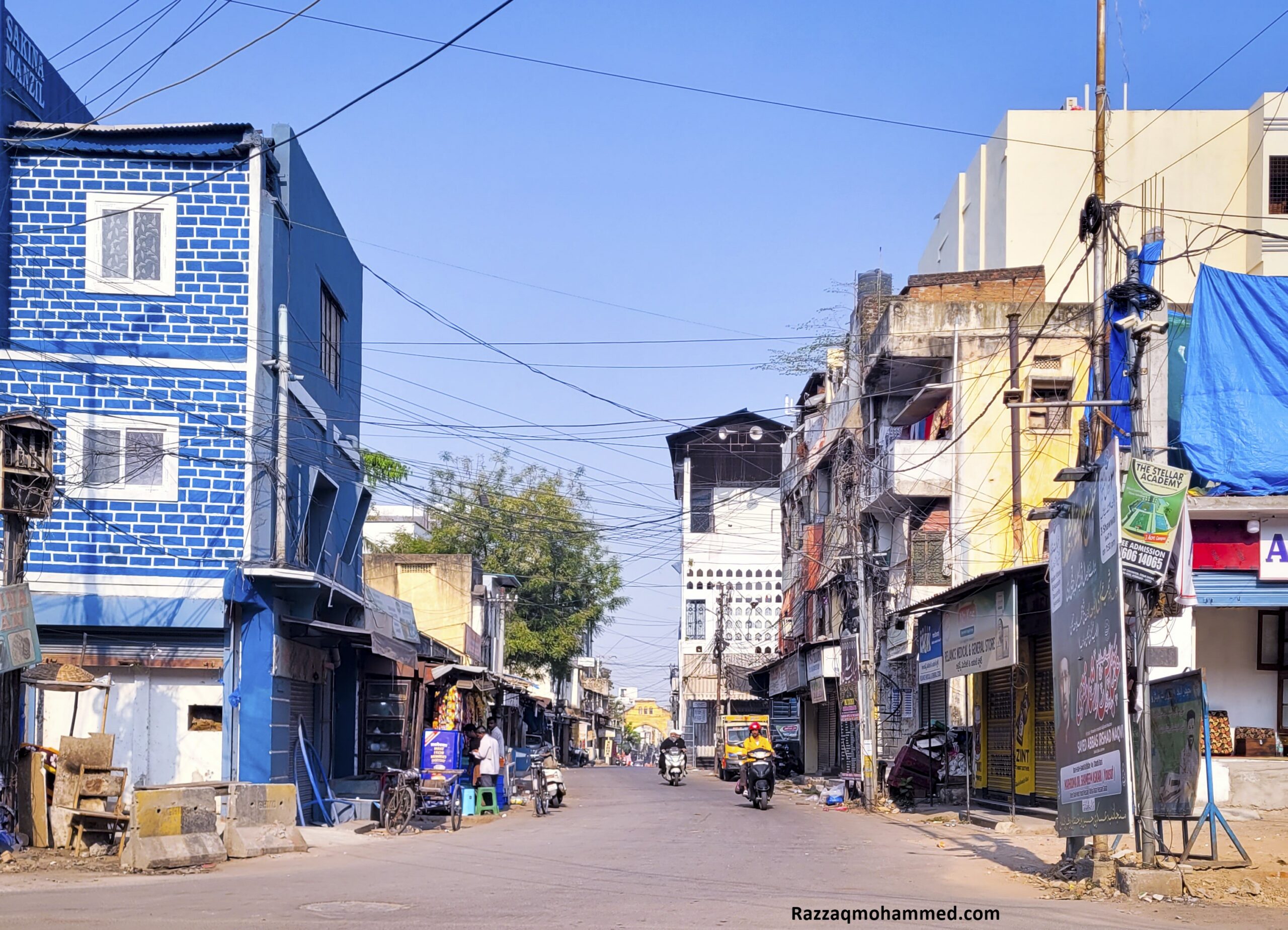
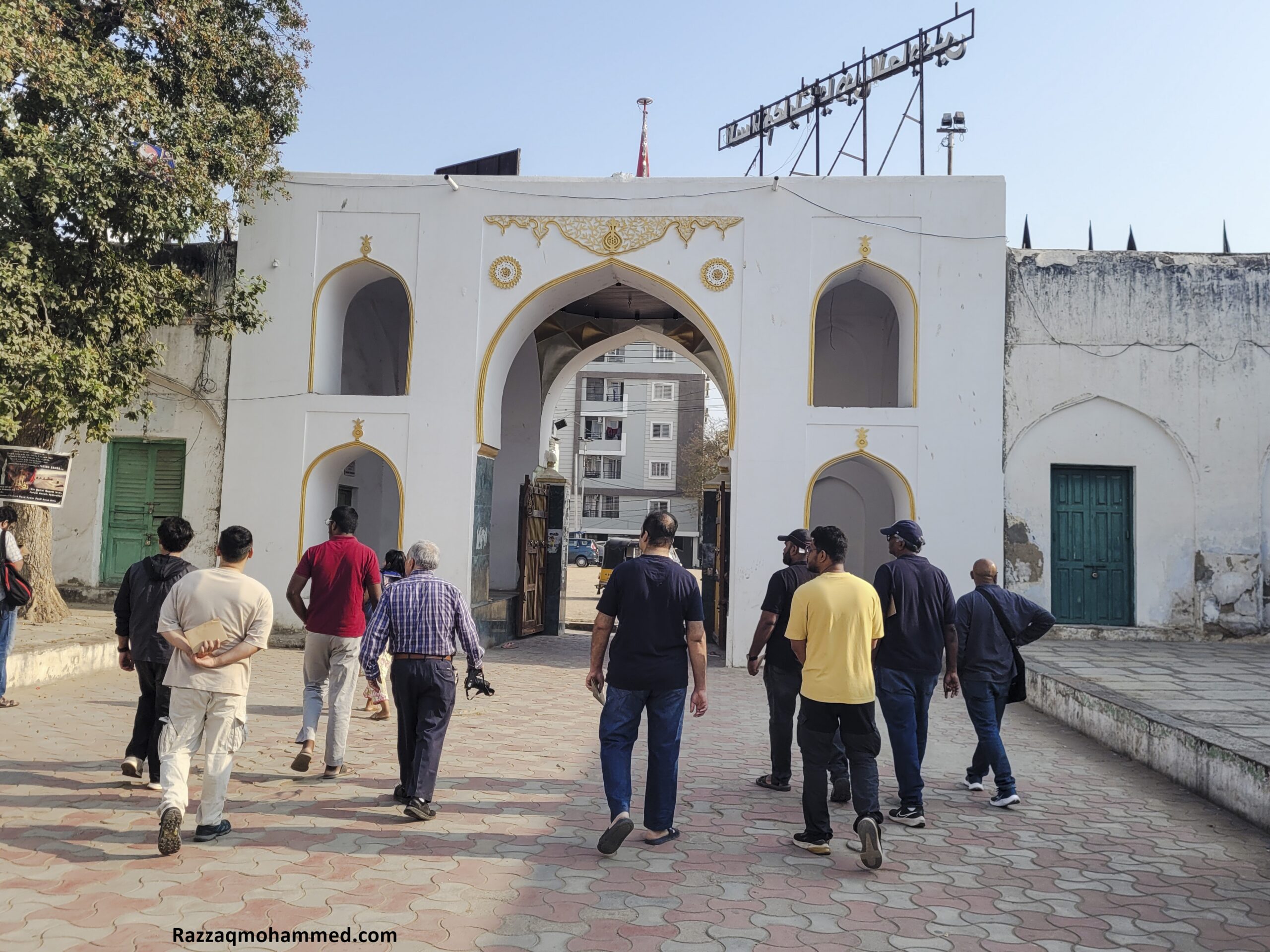
After that refreshment, we stopped next at a gate, or Kaman, which used to be a part of the Purani Haveli complex. The gate was huge, big enough to let elephants pass through it. Opposite the gate is the Chatta Bazaar Road, which is lined with printers who specialise in Urdu printing and from where traditionally most of Hyderabad gets its wedding invitation cards printed. As Tanya was sharing this info with the group, I mentioned that my wedding cards were printed here as well. As a line from a 2017 article in The Hindu states,
Marriages are made in heaven. But the wedding cards are printed mostly in Chatta Bazaar.
From where we were standing, facing the Chatta Bazaar lane, the area behind us to the southwest was the Purani Haveli Complex and the area to the front, which was east, had the Dewan Devdi Complex. This was a bunch of buildings belonging to the Dewans of the Nizams. Dewan was a title given to the Prime Minister of the state by the Nizam. Devdi refers to mansions of Hyderabadi nobles, and Hyderabad is dotted with Devdis all around. One of the most prominent families of Hyderabad were the Salar Jungs, of whom five served as Prime Ministers. The first one to do so was Mir Alam, who became Prime Minister in 1804 (Please note that the title Salar Jung was only first granted in 1883 to Mir Alam’s grandson, Mir Turab Ali Khan). One of the main buildings was the Salar Jung Devdi (not to be confused with the current building housing the Salar Jung Museum). The original Devdi was demolished in the 1960s. The Dewan Devdi complex housed the original Dewan Devdi Palace/Salar Jung Devdi as well as many other structures which belonged to the Salar Jungs.
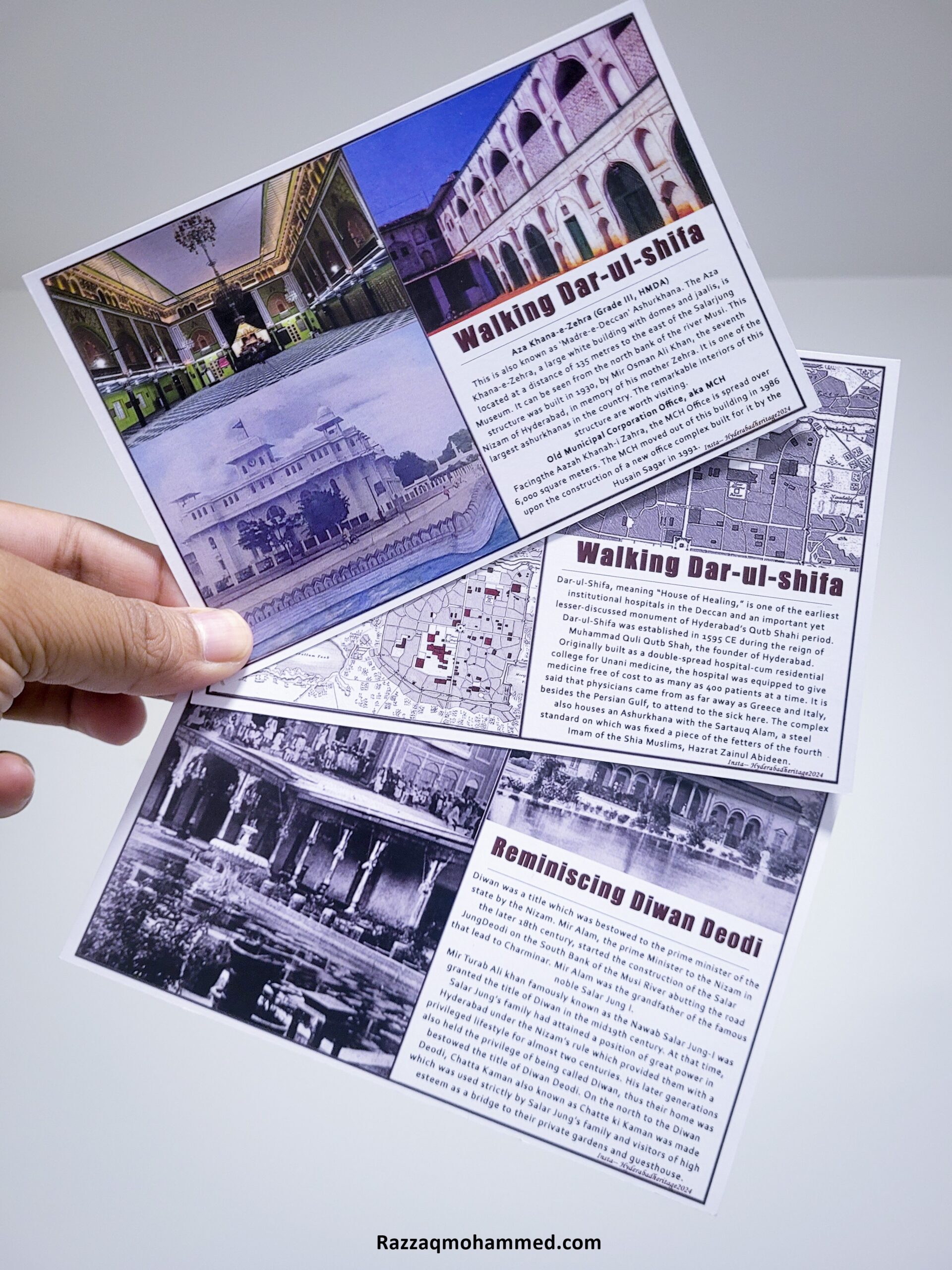
Chatta Bazaar Road divides the Dewan Devdi complex into two parts. Connecting these two parts is the Chatta Kaman, which can be seen in the picture above. This was strictly used by the Salar Jungs and important visitors to access their private gardens and guesthouse. Tanya had given us all postcards containing important info and maps of the localities. One had the original layout of the Dewan Devdi complex, and it was very useful in helping me understand the locations.
Moving on from here, our next stop was at a typical Hyderabadi Cafe for some Irani Chai. I forget the name of the place, but the stop was much needed and we relaxed for a while as we chatted. It was here that I got to know more about Harimohan, who, as I mentioned before, is a writer. He has written five books and had been a cricketer who represented Hyderabad in India’s premier first-class domestic Cricket Tournament, Ranji Trophy. I later bought one of his books. He mentioned he also has a blog (https://harimohanparuvu.blogspot.com/), which made me happy as meeting fellow bloggers is always a joy. His subsequent blog post about this walk helped me immensely in jogging my memory of the walk and the details.
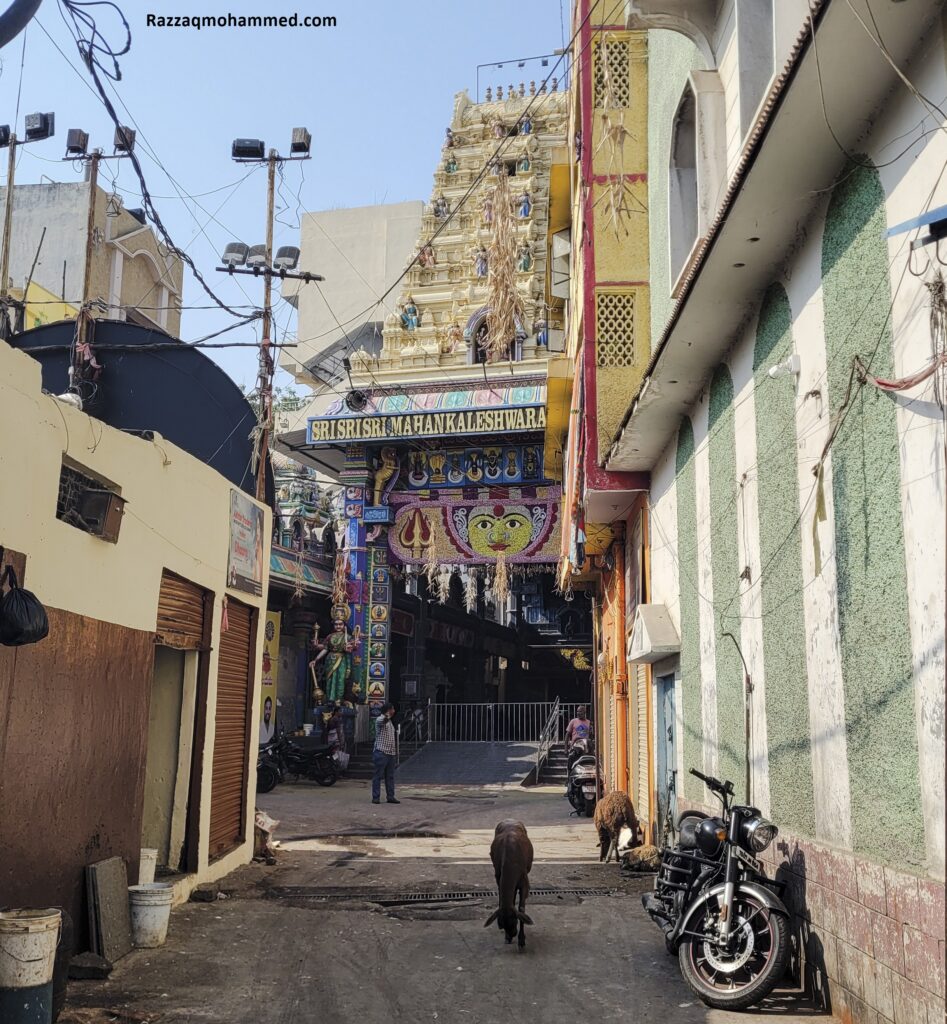
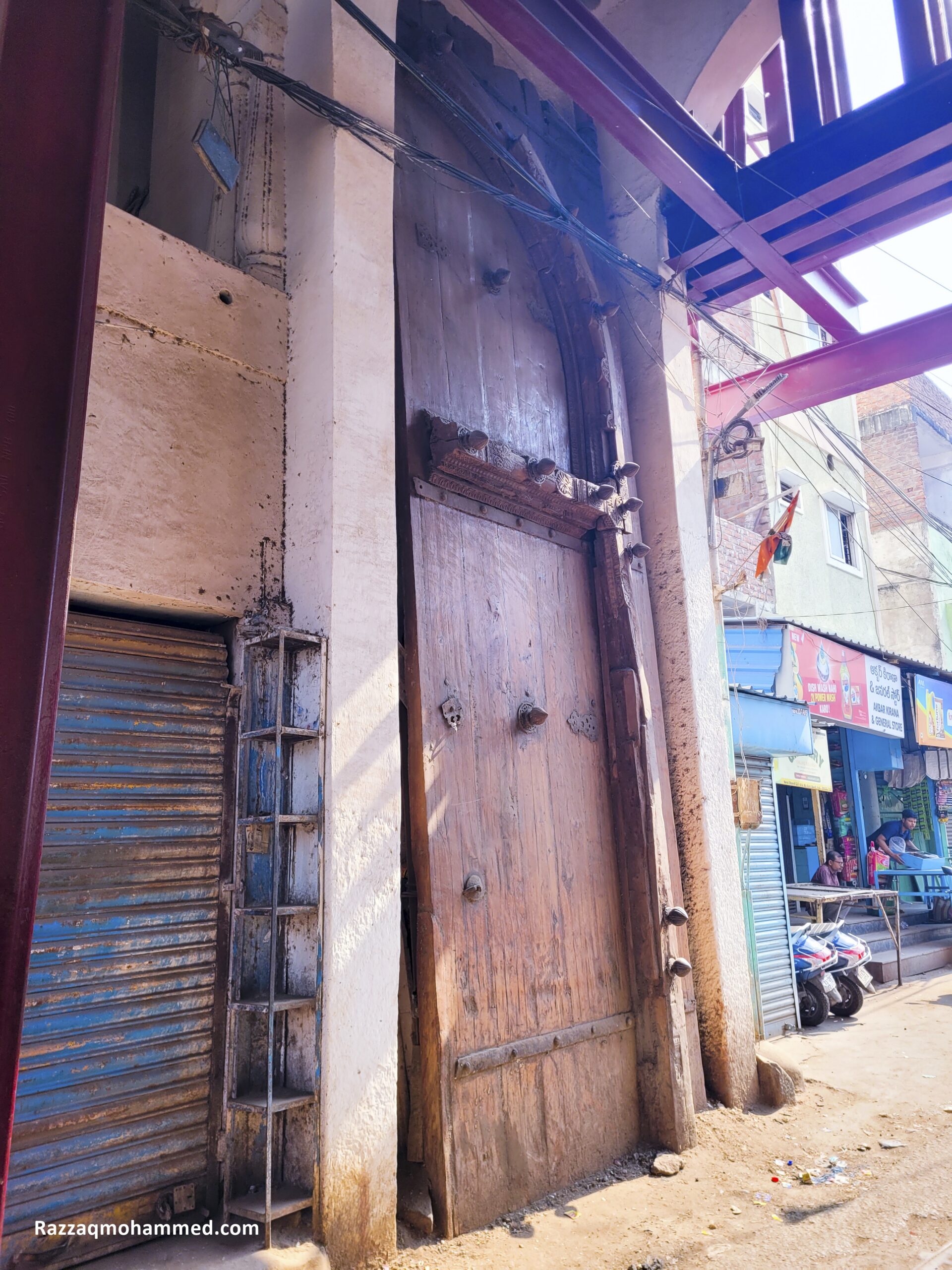
We walked back to the main road and continued slightly southeast on the Mir Alam Mandi road until we reached Mir Chowk Road, where we turned and entered it. This was a narrow street leading us to the last stop of the day, which was Mir Alam Mandi or Market. As we were heading there, we walked past the Sri Sri Sri Mahankaleshwara Temple, which was built in 1809, making it almost 217 years old. We soon reached the Mir Alam Mandi Kaman, which is under a restoration process. This imposing gateway with massive wooden doors is almost 200 years old.
This was the second time I was in the Mir Alam Mandi as part of a heritage walk as it was also a part of the walk I did in 2012. This Mandi is one of the oldest as well as largest markets in Hyderabad. It’s named after the same Mir Alam I mentioned earlier. Though it survives today as a vegetable market, various accounts suggest it was originally a broader commercial space. Currently, it is filled with all kinds of vegetables being sold, from Kothmeer to Kaddu.
Tanya gave us a talk on the history of the place before the walk ended officially. People who had to head off did, but some of us stayed back and chatted. I spoke with Prakash, who was telling me about other walks he had recently been on. Later, I chatted with Tanya, who realized that one of the regulars on her walks was my dad. She had coordinated the walk smoothly and had provided us with very insightful information throughout. The only feedback I would have is that there were at times when it was difficult to hear her amidst the chaotic traffic. It would be nice if she used a small mobile mic and speaker. Overall, I enjoyed the walk and the company of other history and heritage lovers.
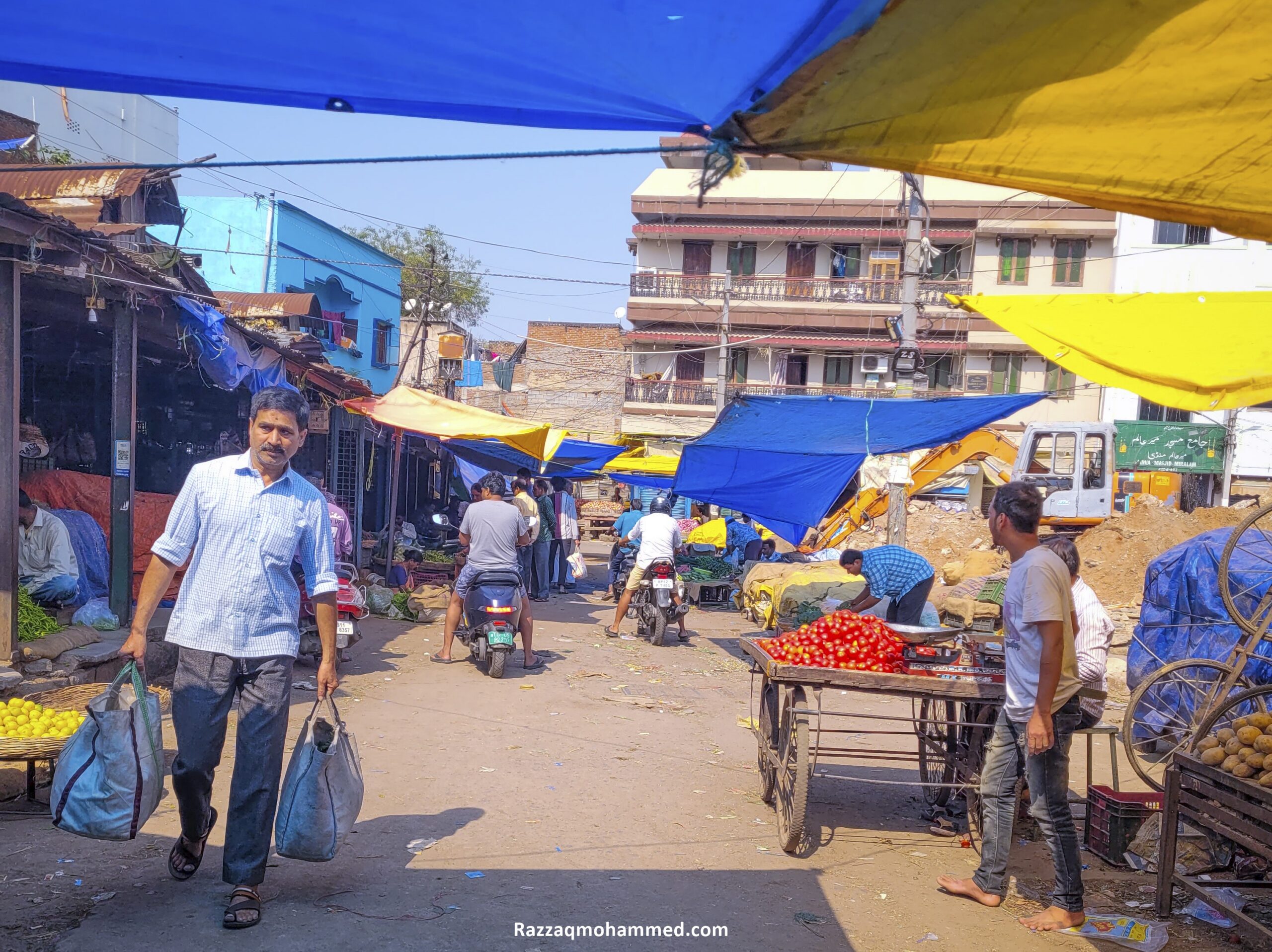
After bidding goodbye to Tanya, I continued exploring the area. I walked around the mandi for a while and then strolled towards the pride of Hyderabad, the Charminar.
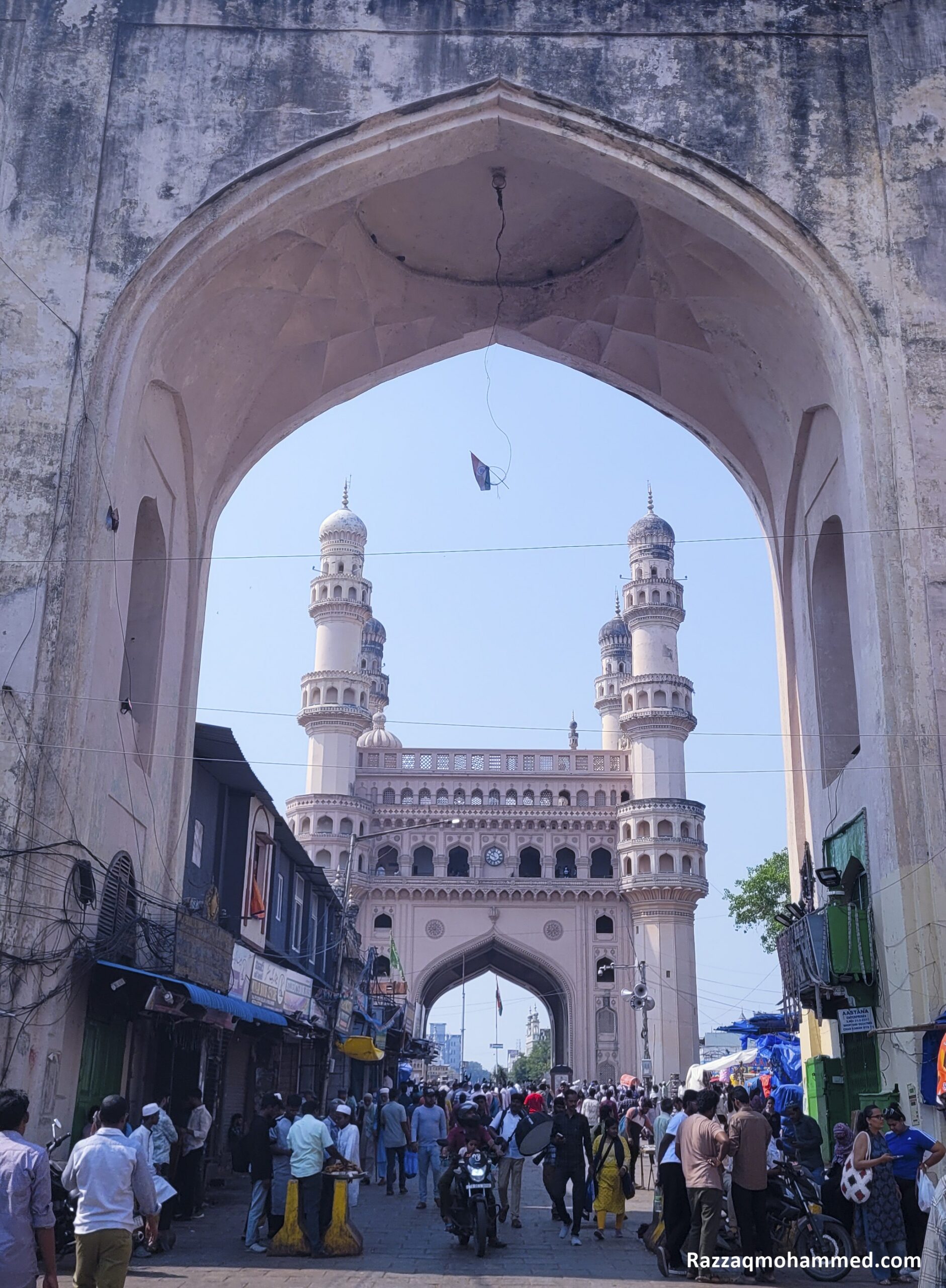
Here, I wandered around aimlessly for some time, taking photographs and simply observing the crowds and the people around me. One building of note here is the Government Nizamia General Hospital or the Unani Hospital. The photograph below of the hospital was taken by my brother, Aziz, back in 2010. He created it by merging three exposures into one image. It was Ramzan time, so the streets were packed with carts selling fruits and other festive items.
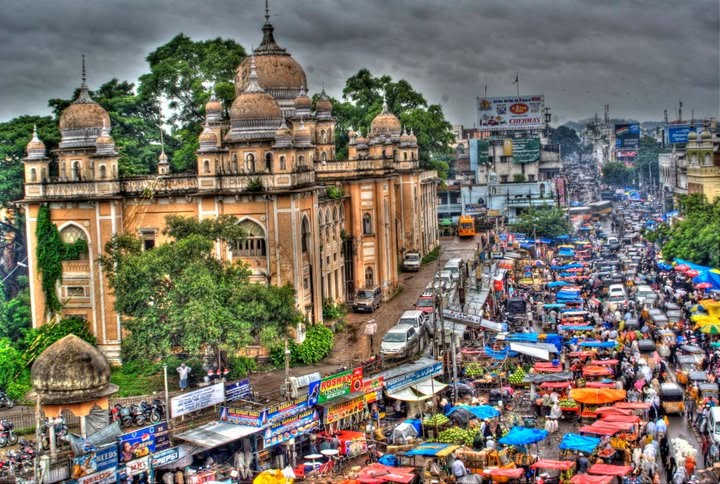
From here, I finally decided to wrap up the trip and hailed an auto for the ride back home. Overall, it was a great way to reconnect with this beautiful city.
For the curious:
- Walk Details: 7:30 AM to 9:00 AM and Rs 300/-
- Mir Mohammed Astarabadi: Interestingly, Astarabadi has his own mausoleum in the Daira Mir Momin Cemetery in Old City, and there are manuscript records of his in the Salar Jung Museum..
- Other works and notable physicians from Dar-ul-Shifa: Tazkirat-ul-Kahalini, Zubdatul-Hukuma, Tibb-e-Farid, Mizain-ul-Tabai, and Tazkirat-ul-Hukuma. The leading “hakims” (doctors) of those days included Shamsuddin Ali Hussain al-Jurjani, Abdullah Tabib, Hakim Taqiuddin Mohammad bin Sadruddin Ali.
- Pioneering Unani Medicine in Qutb Shahi Hyderabad: The Life and Work of Hakim al-Mulk Nizamuddin Ahmad Gilani (1586-1669 AD) — published in the International Journal of Creative Research Thoughts (IJCRT), Volume 12, Issue 3, March 2024. The paper can be accessed here: https://www.ijcrt.org/papers/IJCRT2403199.pdf
- The Times of India article from 2017: Click Here
- Other History and Heritage related posts on Hyderabad from my blog: Click Here
- Link to Harimohan’s blog post about this walk: Click Here